7 Morning Knee Pain Causes and Effective Relief
Last Updated: October 19, 2025
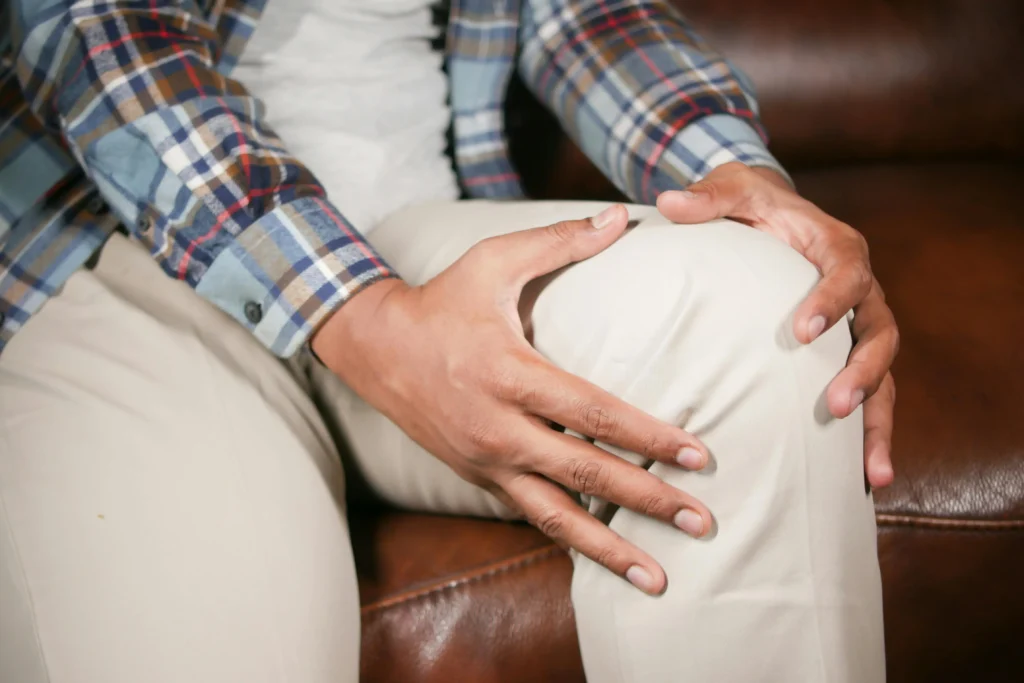
Waking up with morning knee pain is a common experience that affects millions of Americans daily. That stiff, uncomfortable ache that makes it hard to get out of bed or take the first few steps can sour your entire day. If you’ve woken up to this unpleasant feeling multiple times, know that you are not alone, and more importantly, that concrete solutions exist.
In this article, we will delve into the 7 main causes of morning knee pain and provide you with practical, scientifically-backed remedies to relieve the discomfort and regain your mobility.
If you are consistently asking “why do my knees hurt in the morning,” understanding the root cause is the first step toward effective treatment.
Why Does Knee Pain Get Worse in the Morning?
Before exploring the specific morning knee pain causes, it’s important to understand why joint discomfort tends to intensify during the night and upon waking.
Overnight, our bodies remain in a static position for 6–8 consecutive hours. This prolonged immobility leads to:
- Rigididade Articular: Synovial fluid (which lubricates the joints) thickens when we don’t move, making morning movements more difficult.
- Reduced Blood Circulation: Lying down slows the flow of blood to the extremities, delaying the supply of nutrients and oxygen. This lack of movement and circulation often triggers the worst of the morning knee pain.
- Fluid Accumulation: Small amounts of fluid can accumulate around inflamed joints overnight, causing swelling.
- Lower Body Temperature: The body cools slightly during sleep, and lower temperatures can increase joint stiffness.
These factors explain why many people notice a gradual improvement in pain as the day progresses and the joints “warm up” with movement. If your discomfort is specifically morning knee pain, these factors are often at play.
The 7 Main Causes of Morning Knee Pain
1. Knee Osteoarthritis (OA)
Osteoarthritis is the most common cause of knee pain, especially after age 50. This degenerative condition involves the progressive wear and tear of the cartilage that cushions the knee joint bones. Osteoarthritis is the most frequent among the morning knee pain causes for older adults. It is a leading morning knee pain cause.
Characteristic Symptoms:
- Morning stiffness that lasts 20-30 minutes.
- A “grinding” or “crunching” sensation when bending the knee.
- Pain that improves with light movement but worsens after intense activity.
- Intermittent swelling.
Who is Most at Risk:
- People over 50.
- Those with a history of past knee injuries.
- Overweight individuals.
- People whose jobs require frequent kneeling.
2. Rheumatoid Arthritis (RA)
Unlike OA, Rheumatoid Arthritis is an autoimmune disease that causes chronic joint inflammation. It often affects both knees simultaneously, making it a severe morning knee pain cause.
Distinctive Symptoms:
- Morning stiffness that lasts more than one hour.
- Persistent swelling and warmth in the joint.
- General fatigue.
- Symmetrical pain (both knees).
L’artrite reumatoide requires always a medical diagnosis and specialized treatment. If you suspect this condition, consult a rheumatologist immediately.
Early diagnosis of this morning knee pain cause is vital for slowing joint damage.
3. Knee Bursitis
Bursitis is the inflammation of the bursae, small fluid-filled sacs that act as cushions between bones, tendons, and muscles. Bursitis can develop due to repetitive movements or trauma.
Typical Symptoms:
- Pain localized to a specific spot on the knee.
- Visible swelling above or below the kneecap.
- Tenderness to the touch.
- Difficulty fully bending the knee.
4. Patellar Tendinitis (Jumper’s Knee)
Also known as “Jumper’s Knee,” patellar tendinitis is an inflammation of the tendon connecting the kneecap to the shinbone. It is common in athletes but can affect anyone.
Characteristic Symptoms:
- Pain in the front of the knee, just below the kneecap.
- Worsens after sitting for long periods.
- Localized morning stiffness.
- Pain when climbing stairs.
5. Iliotibial Band Syndrome (ITBS)
This condition occurs when the iliotibial band (a band of tissue running along the outside of the thigh) becomes inflamed due to repeated friction. It is frequent in runners and cyclists.
Main Symptoms:
- Pain on the outer side of the knee.
- Burning or tingling sensation.
- Worsens with physical activity.
- Moderate morning stiffness.
6. Meniscus Tear
The meniscus is a cartilage structure that acts as a shock absorber in the knee. It can be torn due to sudden trauma or age-related degeneration.
Typical Symptoms:
- A “locking” or “catching” sensation in the knee.
- Sharp pain when twisting the knee.
- Swelling that increases a few hours after activity.
- Significant morning stiffness.
7. Poor Sleeping Position
Sometimes, the cause of morning knee pain is simpler: an incorrect sleeping posture can put excessive pressure on the knee.
Postural Factors:
- Sleeping with knees fully bent for hours.
- Mattress that is too soft or too firm.
- Lack of a pillow between the knees (for side sleepers).
- Prone position that twists the joints.
10 Effective Remedies to Relieve Morning Knee Pain

Immediate Remedies (To Do Upon Waking)
1. Gentle Bed Stretches
Before getting up, try these exercises while still in bed:
- Gently extend and flex your ankles (10 times).
- Slowly bend your knees toward your chest, one at a time.
- Make small circles with your ankles to reactivate circulation.
2. Apply Heat Therapy
Heat helps reduce stiffness and improve circulation, which is crucial for managing morning knee pain:
- Use a heating pad on the knee for 15-20 minutes.
- Take a warm shower, focusing the water jet on the knee.
- Use specific warming creams or sprays.
This simple heat application can significantly reduce the severity of morning knee pain.
3. Light Massage
A gentle massage can stimulate blood flow and reduce stiffness:
- Massage the area around the knee with circular motions.
- Apply light pressure to the sides of the knee.
- Continue for 3-5 minutes.
Medium- to Long-Term Solutions
4. Muscle Strengthening Exercises
Stronger knees mean less pain. Key exercises for managing morning knee pain include:
- Partial Squats: Strengthens quadriceps and stabilizes the knee.
- Leg Extensions: Strengthens thigh muscles.
- Step-ups: Improves balance and strength.
Perform 2-3 times a week, starting with 10 repetitions per exercise.
Regularly practicing these movements is one of the best long-term solutions for morning knee pain.
5. Maintain a Healthy Weight
Every extra pound (or kilogram) puts 4 pounds (or 4 kilograms) of additional pressure on your knees. Losing even 5% of your body weight can significantly reduce joint pain.
6. Natural Supplements
Certain supplements have shown benefits for joint health:
- Glucosamine and Chondroitin: Support cartilage.
- Omega-3s: Anti-inflammatory properties.
- Turmeric: Naturally reduces inflammation.
7. Topical Applications with Natural Ingredients
Topical sprays and creams with ingredients like arnica, boswellia, and cypress can provide rapid relief without the systemic side effects of oral drugs. Local application allows the active ingredients to act directly on the painful area.
For example, products like Congelum Gel utilize a combination of natural extracts that work in synergy to reduce pain and inflammation. The spray format allows for practical application, even in the morning, leaving no greasy residue.
8. Improve Sleep Quality
Optimize your night position to prevent morning knee pain:
- Use a pillow between your knees if you sleep on your side.
- Avoid sleeping on your stomach.
- Consider a medium-firm mattress.
- Keep your knees slightly bent (neither fully extended nor too flexed).
9. Physical Therapy (PT)
A physical therapist can:
- Evaluate your posture and biomechanics.
- Prescribe specific exercises for your condition.
- Use manual techniques to improve mobility.
- Teach you proper movement to prevent further injury.
10. Adequate Hydration
Drinking enough water is essential to keep joints lubricated. Synovial fluid depends on the body’s overall hydration. Goal: at least 64 ounces (approx. 1.9 liters) of water per day.
When to See a Doctor

While morning knee pain is often manageable with home remedies, some signs require immediate medical attention. Consult a healthcare professional if you experience:
- Severe pain that doesn’t improve after 2 weeks of self-care.
- Significant swelling that progressively increases.
- Inability to bear weight on the knee.
- Visible deformity of the knee.
- Fever accompanied by pain (possible infection).
- Intense redness and heat in the joint.
- History of recent trauma followed by persistent pain.
Your doctor may prescribe:
- Diagnostic tests (X-rays, MRI).
- More potent anti-inflammatory drugs.
- Corticosteroid or hyaluronic acid injections.
- Specialized physical therapy.
- In severe cases, surgery.
For more trusted information on managing chronic knee pain, you can visit the Centers for Disease Control and Prevention (CDC) Arthritis page.
Prevention: How to Avoid Morning Knee Pain
Prevention is always the best cure. Here are daily habits that protect your knees from becoming a source of morning knee pain:
Regular but Appropriate Physical Activity
- Choose low-impact sports (swimming, cycling, yoga).
- Avoid running on hard surfaces if you already have joint issues.
- Alternate workout days with rest days.
Anti-Inflammatory Diet
- Consume fatty fish (salmon, mackerel) rich in omega-3s.
- Include leafy green vegetables and berries.
- Limit refined sugars and processed foods.
- Reduce red meat consumption.
Appropriate Footwear
- Use shoes with good arch support.
- Avoid high heels for prolonged periods.
- Replace athletic shoes every 300-500 miles of use.
Stress Management
Chronic stress increases systemic inflammation. Useful techniques:
- Daily meditation (even 10 minutes).
- Deep breathing.
- Relaxing hobbies.
- Quality sleep (7-8 hours per night).
Frequently Asked Questions (FAQ)

Does cold weather worsen knee pain?
Yes, low temperatures can increase joint stiffness, contributing to morning knee pain. In winter, keep your knees warm with appropriate clothing and consider using thermal knee supports overnight if necessary.
How long should morning stiffness last?
Morning stiffness caused by osteoarthritis typically lasts 20-30 minutes. If it persists for more than an hour, it may indicate rheumatoid arthritis and requires medical evaluation.
Does exercise worsen knee pain?
It depends on the type and intensity. Moderate, appropriate exercise reduces long-term pain, but excessive or high-impact activity can worsen it. Consult a physical therapist for a personalized program.
Are natural remedies as effective as medications?
Natural remedies can be very effective for mild-to-moderate pain and have fewer side effects. For severe pain or serious conditions, they can be used in combination with prescription medications.
Should I use ice or heat on my knee in the morning?
Heat is preferred in the morning, as it reduces stiffness and improves circulation. Ice is more appropriate after physical activity or in cases of acute swelling.
Conclusion
Morning knee pain can have various causes, from arthritis to poor sleeping postures. The good news is that in most cases, it can be effectively managed with a combination of:
- Targeted exercises and stretching.
- Natural topical applications.
- Lifestyle modifications.
- Attention to night posture.
Remember that every knee is different, and what works for one person may not be ideal for another. Experiment with the suggested remedies, listen to your body, and do not hesitate to consult a doctor if the pain persists or worsens.
Taking care of your joints is an investment in your future quality of life. Start today with small changes and you will notice gradual but lasting improvements.
Want to learn more about natural solutions for joint pain? Discover how Congelum Gel can help you regain mobility and daily wellness with natural ingredients and practical application.
Disclaimer: This article is for informational purposes only and is not a substitute for professional medical advice. Always consult your doctor before starting any new treatment.
© 2025 Congelum. All rights reserved.
Privacy Policy | Terms of Use | Cookies | Contact Us